
Vance Security Detail Faces Second Disclosure Investigation as Secret Service’s Institutional Strain Comes Into Focus
New leak probe lands as watchdog reports detail chronic understaffing and planning failures exposed at Butler

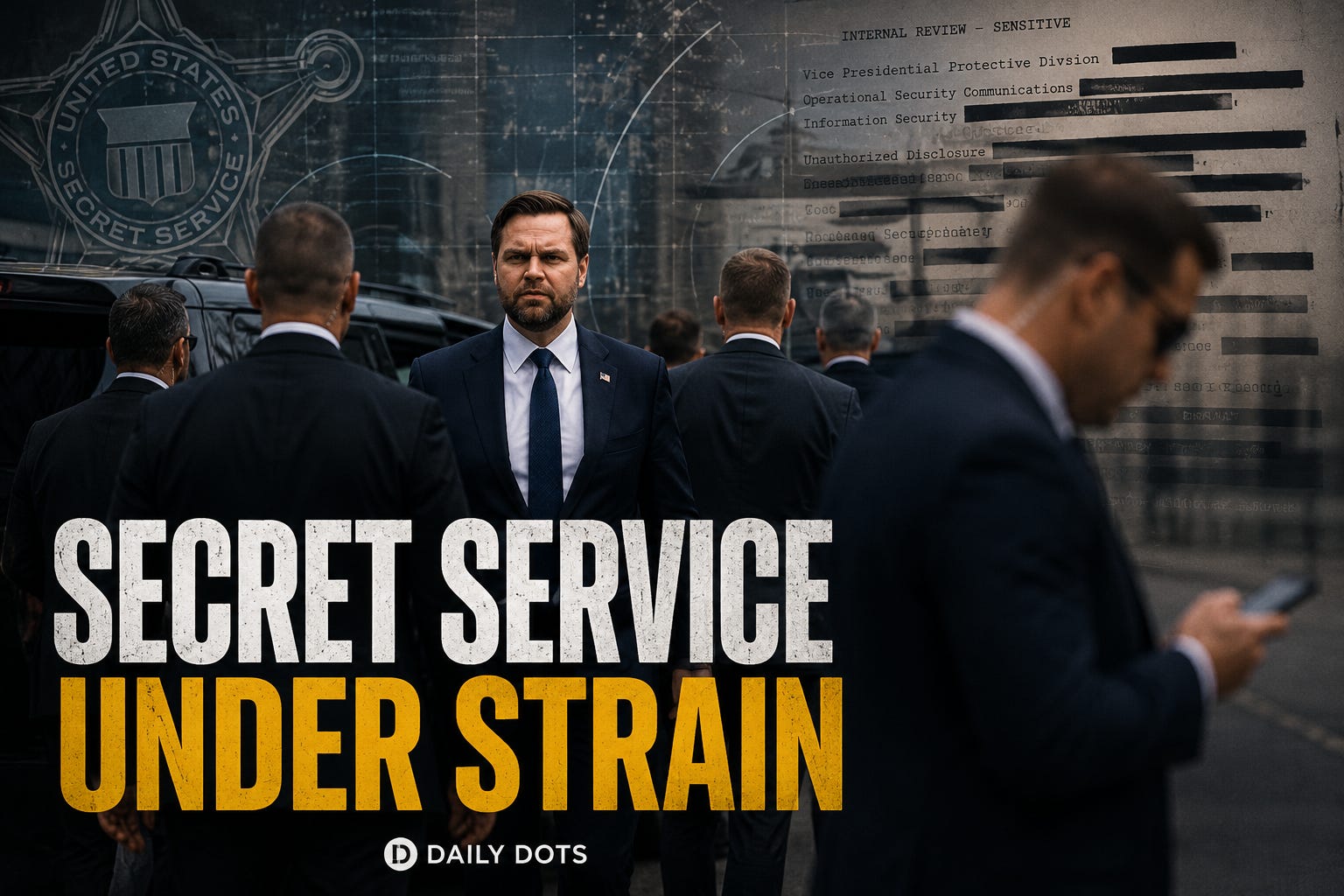
A member of Vice President JD Vance’s Secret Service detail has been placed on administrative leave and is now the subject of a formal investigation that officials say could escalate into a federal criminal case. Secret Service Chief of Communications Anthony Guglielmi confirmed the probe Thursday, telling The Epoch Times that “a member of the Vice Presidential Protective Division is the subject of an administrative investigation, and potential criminal inquiry, involving allegations of compromising operational and information security.” The agency did not name the employee or specify exactly what information was disclosed, but said any conduct that potentially threatens the safety of a protectee “will not be tolerated.”
The employee is suspected of serving as a source for a July 15 MS NOW report describing frustration among Vance’s protective detail over the strain his personal travel schedule has placed on the team. That story reportedly included specific operational details, including plans for Vance and his son to fly on a Marine Corps helicopter to a golf lesson, an outing that was ultimately scrapped due to severe thunderstorms. Subsequent reporting identified the disclosure of those operational travel details as what drew scrutiny from the Secret Service, the FBI, and White House officials. The agent is now under review by the Secret Service’s Office of Professional Responsibility, and it remains unclear whether the case will end in administrative discipline or criminal charges. The sourcing on the employee’s identity remains anonymous: officials say they believe they’ve identified the individual suspected of providing the information, but no public evidence has yet confirmed it.
This is not the first time an employee assigned to Vance’s own detail has faced this kind of scrutiny. In January, a different Secret Service employee assigned to protect Vance, identified publicly as Tomas Escotto, was placed on leave after undercover video released by independent journalist James O’Keefe allegedly showed the agent disclosing sensitive security information. In that case, the agency suspended the agent’s security clearance and revoked his access to facilities and systems, and ordered all Secret Service personnel nationwide to retake mandatory anti-espionage training. USSS Deputy Director Matthew Quinn said at the time that the Secret Service “has a 160-year-old tradition of discretion that sets this agency apart, and we have no tolerance for employees who fail to meet this standard.” Two separate disclosure cases involving employees assigned to the same vice presidential protective operation within roughly six months raise a legitimate question about whether the agency has a broader internal security or supervision problem, or whether the cases are simply two unrelated acts of individual misconduct. The agency’s recent watchdog findings, detailed below, don’t establish a connection to either disclosure case, but they do document broader weaknesses in staffing, training and operational management that make the institutional question harder to dismiss.
The current investigation also lands amid a broader Trump administration effort to identify and prosecute leakers across the federal government. Earlier this month, four New York Times reporters were subpoenaed to testify before a federal grand jury as part of a Justice Department investigation into their reporting on security features aboard the new presidential aircraft gifted to President Trump by Qatar, with Chief of Staff Susie Wiles and FBI Director Kash Patel reportedly helping personally direct that probe. Taken together, the two investigations suggest the administration is assigning unusually high priority to unauthorized disclosures involving presidential and vice presidential security, an approach likely to appeal to Trump supporters who have long complained about unauthorized disclosures from inside the federal government.
The disclosure allegations also arrive just weeks after the Department of Homeland Security’s Inspector General issued two long-awaited reports laying out how badly strained the Secret Service’s staffing and planning had become heading into 2024. One report, issued June 30, found the agency was understaffed by an average of 21.4 percent across fiscal years 2023 and 2024, a shortfall the watchdog said forced agents into marathon shifts with little rest between them and contributed to burnout across the agency’s ranks. The watchdog found the problem went beyond raw headcount: the agency lacked reliable systems for tracking personnel qualifications, clearances and assignments, and found unqualified personnel staffing some specialized protective functions.
A companion report released the same day, focused specifically on the July 13, 2024, assassination attempt against then-candidate Trump in Butler, Pennsylvania, found the Secret Service assigned an under-trained operator to counter-drone duty at the rally; that operator’s equipment malfunctioned, and the Secret Service missed an opportunity to detect a drone flight by shooter Thomas Crooks in the lead-up to the attack. Those staffing and planning findings provide important context for reported longstanding morale complaints on Vance’s own detail, where agents have reportedly voiced frustration over the burden his personal travel places on an already stretched team.
The agency’s institutional problems extend beyond leaks and staffing. Myosoty “Miyo” Perez, the site agent who developed the Butler rally security plan, has now been suspended for a third time in roughly a year and a half. This latest suspension centers on a separate internal investigation into whether she properly disclosed her marriage to a foreign national, according to reporting from RealClearPolitics. That case is not tied to the Butler planning failures themselves, but Perez’s role as the Butler site agent means her ongoing disciplinary history keeps drawing attention back to that day.
It’s worth separating the two 2024 attempts on President Trump’s life here. The Butler attack, where a gunman came within inches of killing Trump and fatally shot rallygoer Corey Comperatore, is where the documented operational failures occurred, now laid out in detail by the DHS Inspector General. Then-Secret Service Director Kimberly Cheatle herself told Congress it was the agency’s most significant operational failure in decades. The second attempt, in September 2024 at the president’s West Palm Beach golf course, played out differently: a Secret Service agent spotted suspect Ryan Routh before Trump came into his line of fire, and Routh fled after the agent opened fire. The two incidents shouldn’t be treated as equivalent examples of agency failure.
Taken as a whole, the picture is not of one isolated personnel case but of an agency facing several different strains at once. Two disclosure investigations tied to the vice president’s own protective detail, a Butler site agent facing a separate and unrelated discipline case, and a federal watchdog that has now formally documented the understaffing and planning gaps surrounding the worst Secret Service security failure in decades: those are four distinct problems, not one recurring defect, but they are converging on the same agency at the same time. Whether the current Vance-detail investigation ends in administrative discipline or becomes the criminal case officials say it could be, it adds another data point to a record that Congress and DHS oversight will have to reckon with.
The Daily Dots stays free to read. Work like this takes real hours — if it’s worth a few dollars a month, a paid subscription keeps it coming and keeps it free for folks who can’t swing it. No wall, no guilt: read it, share it, we’re square.

🏰 When you’re done doomscrolling, come escape with me. Soul Castle is my original Scottish time-travel fantasy series — where old powers wake, timelines collide, and every choice echoes across centuries.